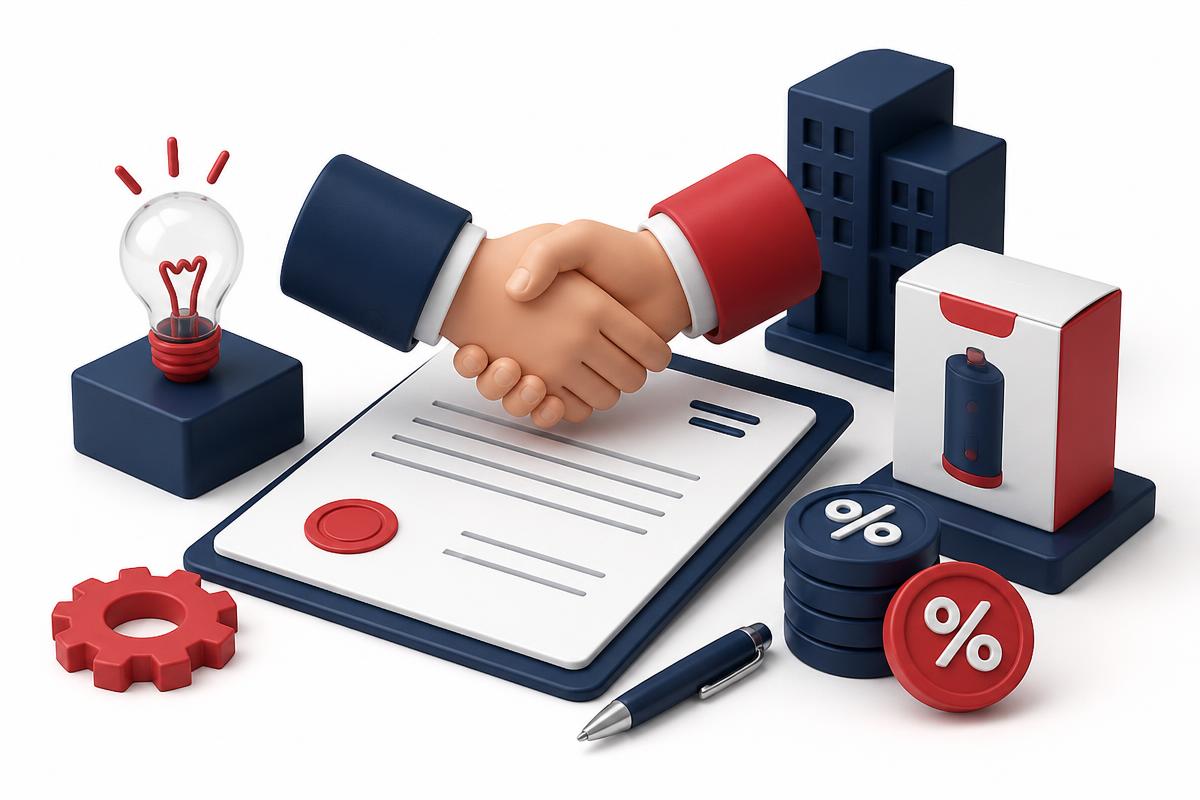
Manufacturing means you own everything — the tooling, the inventory, the risk and the upside. Licensing means someone else carries the load and you take a percentage.
I've done both. Here's how to judge which one fits your invention, and how the licensing conversation actually goes.
License or manufacture?
- License when tooling costs are high, distribution is relationship-driven, or the category is dominated by a few big players.
- Manufacture when margins are strong, the audience is reachable directly, and you want to build an asset you can sell later.
- Hybrid: manufacture a small run to prove demand, then license from a position of evidence.
What royalty rate is realistic
For consumer products, 3–7% of net wholesale is a common range; simple novelty items sit lower, technical products with strong IP can go higher. Advances exist but are usually modest for first-time inventors.
Judge the deal on total expected royalties, not the headline percentage. Five percent through a distributor with national reach beats twelve percent through a company that sells 300 units a year.
Finding the right company
- Walk the category — physically or online — and list who already sells to your buyer.
- Prioritise companies with an adjacent product line, not an identical one.
- Find the person: product development, category manager, or the owner in smaller firms.
- Attend the trade show where they exhibit. Ten minutes in person beats fifty emails.
The pitch: one page, one minute
Photo of the product in use, a headline benefit, three bullets of proof, the target price and margin, patent-pending status, and your contact. Nothing else. Buyers scan; they don't study.
Terms that decide whether the deal is good
- Exclusivity — grant it only with minimum annual sales requirements.
- Territory and channel — don't hand over worldwide rights for a domestic partner.
- Term and termination — an escape route if they shelve the product.
- Audit rights and payment schedule — quarterly, with the right to inspect records.
- Improvements — clarify who owns future modifications.
Frequently asked questions
Do I need a patent to license an invention?
Not always, but patent-pending status dramatically improves your negotiating position because it gives the licensee something exclusive to buy. Many deals are signed on a provisional filing.
What is a typical invention royalty rate?
Commonly 3–7% of net wholesale price for consumer products, varying with category, IP strength and how much of the risk the licensee is carrying.
Turn the reading into action.
Explore practical tools for developing your concept, launching a product and building a business from the ground up.