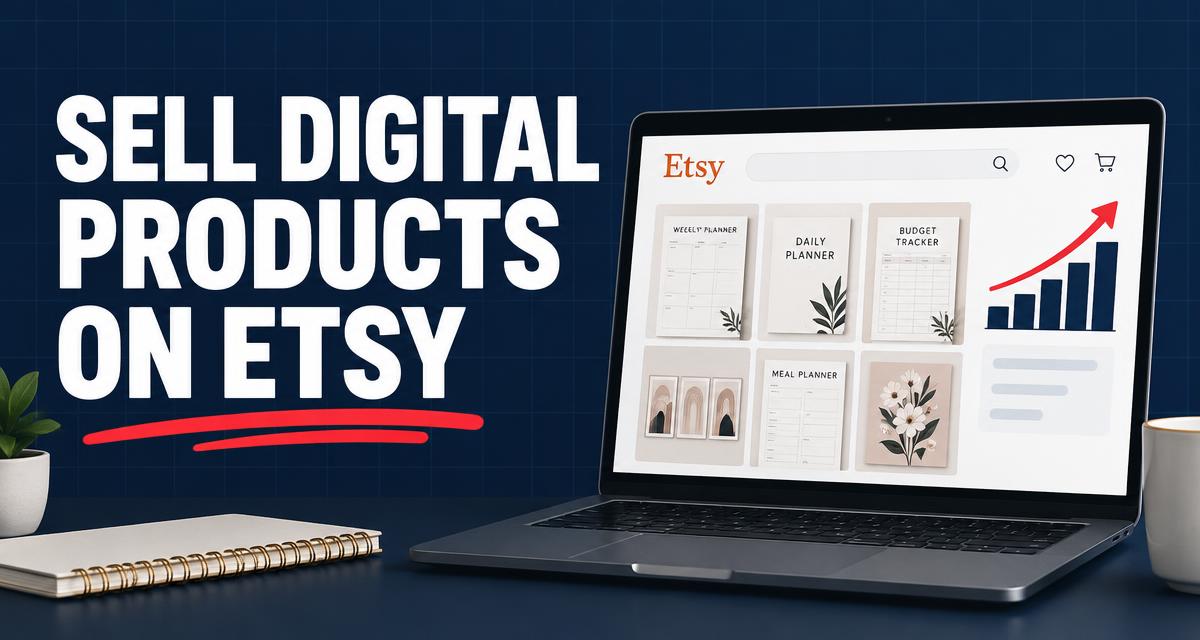
Etsy is the fastest place to test whether a digital product sells: millions of buyers already search there for planners, templates and printables, and a listing costs cents. You can go from idea to live shop in a weekend.
This guide covers the full path — shop setup, your first listing, pricing, search basics — and the four mistakes that leave most new shops at zero sales.
Set up the shop in an afternoon
- Create your Etsy account and open a shop — pick a name that says what you sell.
- Add a simple banner and logo; clean beats clever.
- Write a shop description naming your product type and who it is for.
- Set up payment and a shop policy covering digital-download terms.
Create a listing that converts
Your listing does the selling. Use all ten image slots: a clean cover image, the product in use, what's included, and a size/format graphic. Buyers cannot touch a digital product, so the images must answer every question.
In the description, lead with the outcome ('plan your week in 10 minutes'), then list exactly what files they receive, the sizes, and how download works. End with a note that it is a digital download — no physical item ships.
Price for the first fifty sales
New shops win on value, not margin. Price your first products between $3 and $12 — low enough for an impulse yes, high enough to signal quality. Raise prices once reviews accumulate.
Bundles are the fastest way to raise order value: three related printables at $14.99 outsell three separate $5.99 listings and give buyers a reason to choose you over a single-item competitor.
Get found in Etsy search
- Put your main keyword at the start of the title — 'Budget Tracker Printable' beats 'The Harmony System'.
- Use all 13 tags; mix broad terms ('planner printable') with specific ones ('biweekly budget pdf').
- Write titles for humans first — keyword-stuffed gibberish kills clicks.
- Renew listings and add new products regularly; active shops rank better.
The four mistakes that keep shops at zero
- Listing one product and waiting — shops with 10+ listings get found far more often.
- Copying bestsellers exactly — you compete with their reviews and lose.
- Ignoring the cover image — buyers scroll past blurry or cluttered thumbnails.
- No follow-up — a thank-you note with a discount code turns buyers into repeat customers.
Frequently asked questions
Is selling digital products on Etsy worth it?
Yes as a starting point: low listing costs, built-in buyer traffic and instant delivery make it the cheapest way to validate a digital product. Margins are better on your own site, so many sellers use Etsy to prove demand first.
What digital products sell best on Etsy?
Planners, budget trackers, wall art, party printables, templates and kids' activities consistently perform. The winners solve a specific need for a specific person rather than targeting everyone.
How much does it cost to sell digital products on Etsy?
Listings cost a small fee each (around $0.20) plus transaction and payment processing fees per sale. Expect Etsy to take roughly 10% of each sale in total fees.
How do I deliver digital files on Etsy?
Upload the files directly to the listing (up to five files, 20MB each). Etsy emails buyers a download link automatically after purchase — delivery is fully hands-off.
Need products worth listing?
Study how a complete digital product line is structured — the Digital Vault Bundle shows planners, trackers and templates packaged to sell together.