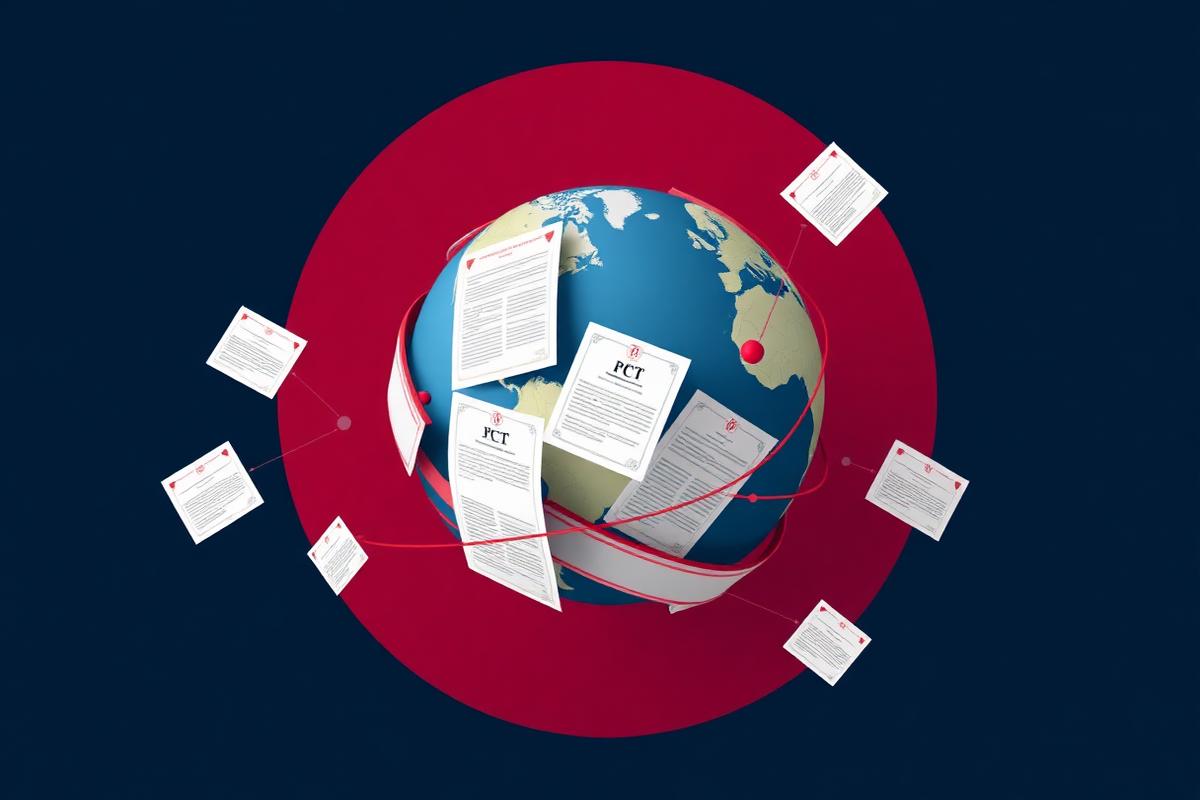
There is no such thing as a worldwide patent. Anyone selling you one is selling you nothing. What exists is a treaty system that lets you delay the expensive country-by-country decision for up to 30 months while you find out whether your product sells.
That delay is the real product. Used properly, it buys you two and a half years to build sales evidence before you commit five figures to foreign filings.
Stage 1 — your home filing (month 0)
File first where you live: a $60–$130 USPTO provisional in the US, a £60 IPO application in the UK, or the equivalent at your national office. This sets your priority date, the date the rest of the world will measure your invention against.
Stage 2 — the 12-month priority window
Under the Paris Convention you have twelve months from that priority date to file in other member countries and still claim the original date. This is the cheapest, highest-leverage year of your inventing life.
Spend it on evidence: a working prototype, a sell sheet, pre-orders, retailer conversations, a distribution meeting. If nobody wants it, let the filing lapse and you have lost a few hundred, not fifty thousand.
Stage 3 — the PCT application (month 12)
- One application, filed through WIPO, that reserves your rights in 150+ member states.
- Official fees typically run $3,000–$5,000 including the transmittal, search and international filing fees; attorney drafting adds more.
- You receive an International Search Report and a written opinion — a genuinely useful early read on whether your claims will survive.
- It buys you another 18 months. A PCT does not grant a patent anywhere; it defers the decision.
Stage 4 — national phase entry (month 30)
Now you choose actual countries, and each one bills you separately for filing, translation, local agent fees and examination. Budget $3,000–$8,000 per country, and more where translation is required.
By this point you should be choosing based on sales data, not optimism.
- United States — largest consumer market, worth it for most products.
- European Patent Office — one application covering many European states, then validation in the ones that matter.
- China — essential if you manufacture there or expect copies; also consider a cheap utility model early.
- Japan, South Korea, Canada, Australia — add only where you have a concrete distribution route.
The strategy most first-time inventors should actually run
- File cheaply at home for the priority date.
- Spend twelve months proving demand and chasing a licensing or distribution deal.
- If a licensee appears, let them fund the international filings — that is normal and negotiable.
- Only self-fund a PCT when you have revenue or a signed commitment that justifies it.
Getting the commercial part right
The licensing and royalty playbook and the pitch deck templates in the complete system are built for exactly this window: turning twelve months of patent-pending status into a deal that pays for the rest of the process. That is how TeeterToss reached national distribution through Gopher Sports.
Frequently asked questions
Is there such a thing as a worldwide patent?
No. Patents are territorial. The PCT is a single international application that reserves your rights and delays country choices, but every patent is ultimately granted country by country.
How much does a PCT application cost?
Roughly $3,000–$5,000 in official fees, plus attorney costs. National phase entry later adds around $3,000–$8,000 per country.
How long do I have to file internationally?
Twelve months from your priority date to file abroad or file a PCT, then up to 30 months from that priority date to enter national phase.
Which countries should a first-time inventor file in?
Start with your home market plus wherever you manufacture. Add others only when sales or a licensing deal justifies the cost.
Turn the reading into action.
Explore practical tools for developing your concept, launching a product and building a business from the ground up.