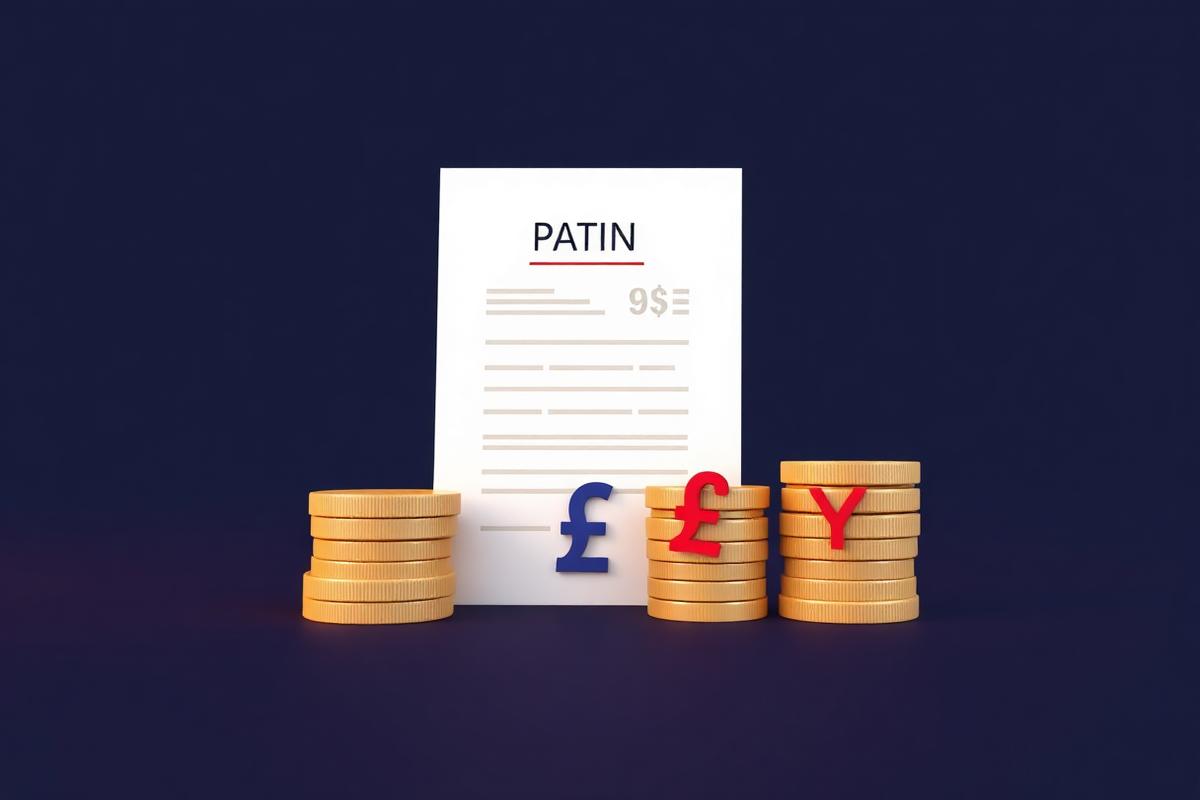
The single biggest reason good inventions die is a wrong number in someone's head. People hear "a patent costs $20,000" and quietly shelve the idea forever. That figure is real for a fully prosecuted utility patent with an attorney — and completely irrelevant to your first step.
Here is what each major office actually charges, and what the cheapest legitimate entry point looks like in each. Confirm current fees with the relevant office before you file; they change.
United States (USPTO)
- Provisional patent application: about $65 micro entity, $130 small entity. This is the $60-ish 'patent pending' everyone talks about.
- Non-provisional utility filing, search and examination fees: roughly $500–$2,000 depending on entity size.
- Attorney drafting and prosecution: $5,000–$15,000 typical.
- Issue and maintenance fees due at 3.5, 7.5 and 11.5 years.
- Timeline: 18 months to 3 years to grant. Cheapest legitimate start: a self-filed provisional.
United Kingdom (IPO)
- Online filing: £60. Search: £150. Examination: £100.
- Attorney support: £3,000–£6,000 typical.
- Renewals begin in year four and escalate annually.
- Timeline: two to four and a half years to grant. Cheapest legitimate start: a £60 online filing with search deferred.
China (CNIPA)
- Invention patent filing fee: around ¥900, with substantive examination around ¥2,500.
- Utility model: cheaper, no substantive examination, often granted within 6–12 months. Ideal for mechanical products and for anyone manufacturing in China.
- Local agent fees: typically $1,000–$3,000, and a Chinese-language filing is required.
- China is first-to-file with no meaningful grace period — filing before disclosure matters more here than anywhere.
Europe (EPO)
- Filing, search, designation and examination fees commonly total €5,000–€6,000 before attorney costs.
- Attorney and translation: often another €5,000–€10,000.
- Validation and renewals are paid per country after grant, so the real cost scales with how many markets you keep.
- The Unitary Patent simplifies validation across participating states — worth asking an attorney about if Europe is your primary market.
The comparison that actually matters
Cheapest way to be legitimately patent pending: about $65 in the US, about £60 in the UK, a few hundred dollars for a Chinese utility model with an agent.
Full grant with professional help: $8,000–$20,000 in the US, £4,000–£8,000 in the UK, $3,000–$6,000 in China, €10,000–€15,000 in Europe.
The gap between those two rows is the twelve-month window. Almost nobody should jump straight to the second row before proving the product sells.
Spend the money in the right order
That order is the whole Dream Kit System. The audio course, the AI coach and the template packs exist so you can execute the first three steps in weeks rather than years — $25 for the AI coach, $49 for the course, $99 for everything.
- Cheap home filing for the priority date.
- Prototype and video, because buyers respond to motion, not drawings.
- Sell sheet and outreach to licensees and distributors.
- Only then: attorneys, PCT and foreign filings — ideally partly funded by a deal.
Frequently asked questions
What is the cheapest way to get patent pending?
A self-filed USPTO provisional at roughly $65 for a micro entity, or a £60 online filing at the UK IPO. Both give you a priority date and the right to say patent pending.
Why is a European patent so much more expensive?
The EPO charges filing, search, designation and examination fees, and after grant you validate and renew country by country, often with translations.
Is a Chinese utility model worth filing?
For mechanical products, usually yes. It is inexpensive, granted quickly without substantive examination, and valuable leverage if you manufacture in China.
Do I have to file in every country I want to sell in?
To have enforceable patent rights there, yes. Many inventors instead protect their main markets and rely on speed, brand and distribution elsewhere.
Turn the reading into action.
Explore practical tools for developing your concept, launching a product and building a business from the ground up.