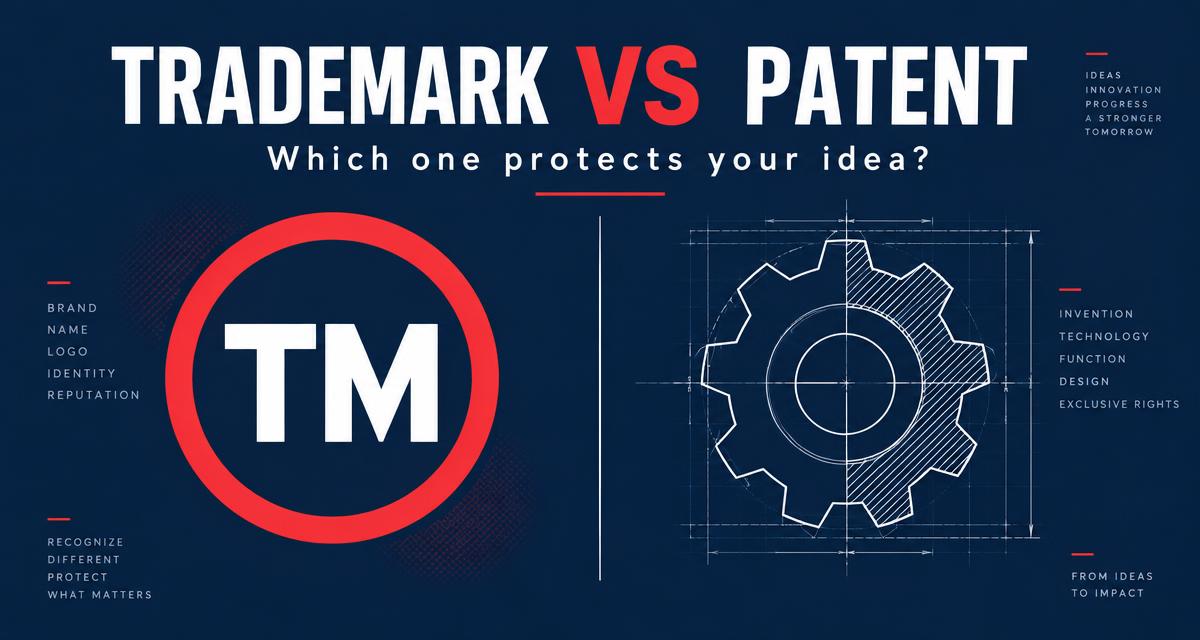
Founders often use trademark, patent and copyright interchangeably, but each protects something completely different. Choosing the wrong one can leave your most valuable asset exposed.
This guide explains the basics in plain English. It is general information, not legal advice — speak with a qualified professional for your situation.
The quick comparison
- Trademark protects brand identifiers: names, logos and slogans. It can last as long as you keep using and renewing it.
- Patent protects how an invention works or looks. US utility patents generally last 20 years from filing.
- Copyright protects original creative work: writing, art, music, software code and videos. It exists automatically once the work is created.
When you need a trademark
If customers recognize you by a name or logo, that name is an asset. A trademark stops competitors using a confusingly similar brand in your market. Search existing registrations before choosing a name.
When you need a patent
If your product has a new, useful and non-obvious function or design, a patent may protect it. Many inventors file a provisional application first to secure an early filing date while they test the market.
When copyright is enough
Ebooks, printables, courses, audio and graphics are covered by copyright automatically. Registering can strengthen your ability to enforce it in some countries, including the US.
Most businesses need more than one
- A physical product may need a patent for the design and a trademark for the brand.
- A digital product business relies on copyright for content and a trademark for the brand name.
- NDAs protect ideas you share before any formal protection is in place.
Frequently asked questions
What is the main difference between a trademark and a patent?
A trademark protects a brand name or logo; a patent protects an invention's function or design.
Can I patent an idea?
Not an abstract idea alone. You need a concrete invention that can be described in enough detail to be made and used.
Is copyright automatic?
Yes, in most countries copyright exists as soon as original work is fixed in a tangible form. Registration adds enforcement benefits in some places.
Which should I get first?
It depends on your asset. Protect whatever is most valuable and most at risk of copying — often the brand name or the invention itself.
Protect ideas before you share them
The NDA & IP Protection Template Pack gives you ready-to-use agreements and a checklist for sharing ideas safely.