
Unlocking Your Product’s Power: The 12-Month ‘Patent Pending’ Playbook
Unlocking Your Product’s Power: The 12-Month ‘Patent Pending’ Playbook
Unlocking Your Product’s Let me ask you something completely direct. You filed your $60 USPTO provisional patent—or you are just about to—and you finally feel that wave of relief. You think, “I did it! My idea is safe.”
You feel like a real inventor.
But here is the absolute brutal reality that nobody on Instagram wants to tell you: you have not finished anything yet. You have just started a ticking clock.
I have seen too many brilliant business ideas die in this exact phase, simply because the founder treated their provisional patent like a finished product. It’s not. It is just a legal jacket you threw on a bar chair to save your spot. Now you have exactly 12 months to actually do something before the bar closes.
The value of this phase isn’t just in legal protection; it’s in credibility. When you are sitting in front of a verified manufacturer or a potential investor, saying “I have a patent-pending product” instantly builds professional trust. People are busy. They are distracted. According to standard lean startup methodologies taught at places like the <a href=”https://hbr.org/2013/05/why-the-lean-start-up-changes-everything” target=”_blank” rel=”noopener”>Harvard Business Review</a>, you must test your hypotheses first. This 12-month period is the test.
Let’s talk about how to use this entire year to turn that legal groundwork into a functioning business using a systematic playbook.
The Magic of ‘Patent Pending’ Status
So what is the actual magic of this 12-month timeframe? People think it is just a safe space where you can relax, but it is actually your biggest marketing asset.
Look, basically, the second you file that provisional patent application, you get to legally slap “Patent Pending” on your website and products. This little phrase gives you two insane benefits that you must exploit:
Credibility: When you talk to a manufacturing partner or a potential investor, saying “I have an idea” might not get you anywhere. Saying “I have a patent pending product” instantly builds trust. You are not just a dreamer; you are someone who has taken legal steps to protect your intellectual property.
Deterrence: While not permanent protection, “Patent Pending” is a serious warning sign to generic brands and copycats. It tells them that if they rip off your exact description and diagrams, you have a timeline history showing you filed it first. If you want to use this momentum to <a href=”https://dreamkitsystem.com/” target=”_self”>build your online brand</a> during this year, you have to exploit this early legal protection.
The Step-by-Step 12-Month Roadmap with DKS
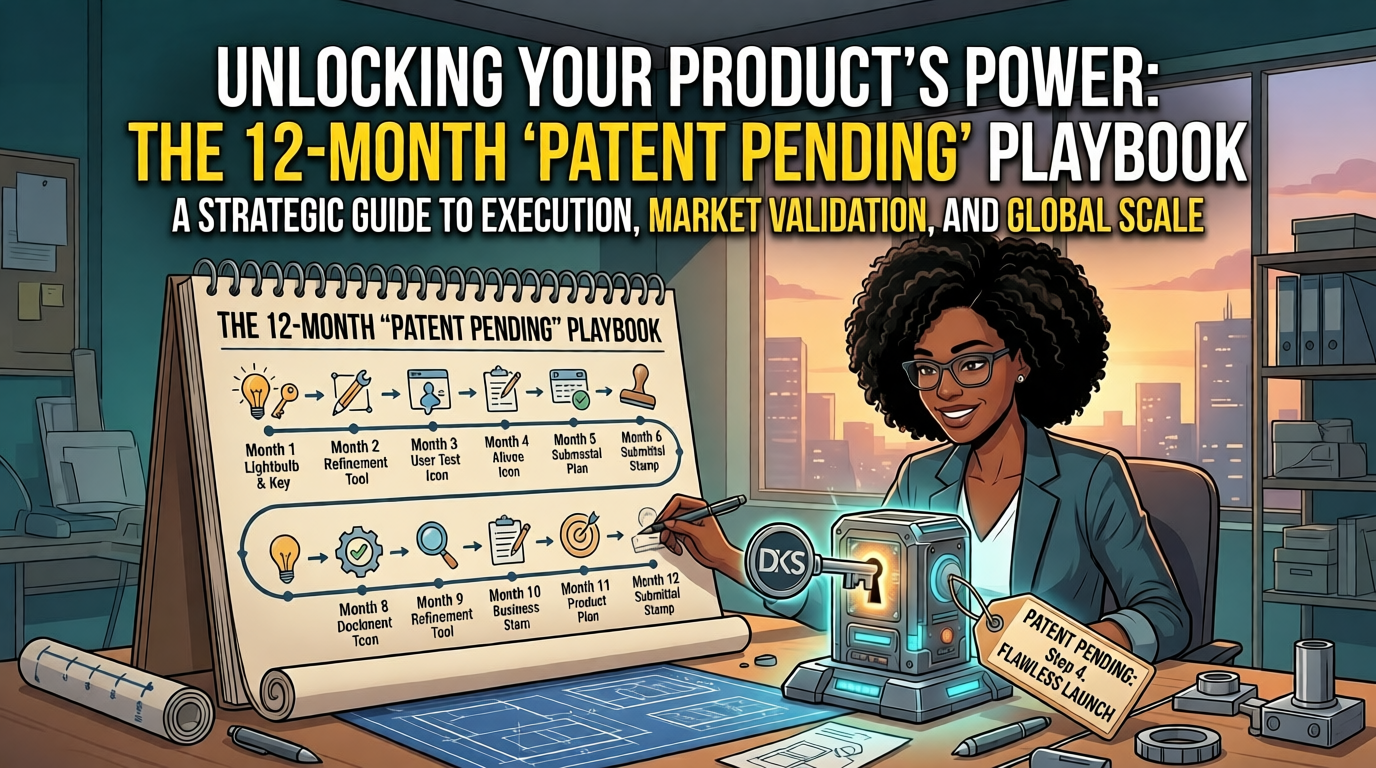
You deserve to stop overthinking and start executing. Since this is a DIY process to save money, leaning on a framework like Darryl’s Dream Kit System (DKS) is invaluable. It breaks down that overwhelming year into manageable, practical steps.
Here is the exact framework to follow, connecting your legal protection with your business development:
Step 1: Refining the Vision & Visual Assets (Months 1-3)
You just filed, but was your description perfect? Step one of the DKS blueprint forces you to put the legal tools away and clearly define your actual product. Use this time to refine your diagrams and finalized drawings. Your description has to be extremely clear. If you leave something crucial out because you are “secretive,” and someone else copies that specific part, you have zero protection later. (Don’t lie on your government forms; the entire patent can be invalidated later). <a href=”https://dreamkitsystem.com/” target=”_self”>Start your online business today</a> by using DKS to finalize your primary digital assets—the refined drawings, user feedback, and test data you need to be taken seriously.
Step 2: The Marketplace ‘Fake Door’ (Months 4-7)
You cannot afford to build a perfect prototype right now. It is a terrible idea. Instead, use the DKS framework to build a very simple, single page explaining your product concept and explaining your proposed solution. Slap a “Buy Now” or “Sign Up for Early Access” button on it. Now, drive traffic to it using Meta ads or relevant social media groups. If people click that button, you give them a simple message: “We are perfecting the product. Leave your email, and you’ll get 50% off.” (Yes, even on your ugly initial sketches). If hundreds of people leave their emails, you have a validated market. This validated strategy creates your permanent legal strategy.
Step 3: Actionable Execution (Months 8-11)
Data wins. If the market loves your product from Step 2, you have to move fast. Step three of the DKS blueprint is all about momentum and execution. Finalize your manufacturing partner, set up your distribution network, and prepare your final digital foundation. This is the exact moment you must choose your permanent legal path. Will you commit to the non-provisional patent (which costs much, much more)? Are you going to seek global protection? Your data from Step 2 tells you if the expensive legal path is worth it. For more on the detailed differences between provisional and non-provisional filing, check out this excellent guide on <a href=”https://developers.google.com/search/docs/monitor-debug/search-console-start” target=”_blank” rel=”noopener”>from Google Search Central</a>. Knowing your options helps you prepare.
Step 4: The Flawless Launch (Month 12)
The deadline is practically here. If you have built a real business, this is the final month to file your non-provisional patent application. A successful non-provisional application requires extreme precision. Miss this by one day, and you have lost all protection for your work. Don’t miss this deadline. Your preparation from Step 1 and the market data from Step 2 must be organized to present your validated idea professionally. A successful launch ensures your permanent legal protection.
Three Mistakes to Avoid during ‘Patent Pending’
Trap 1: Hiding the secret sauce. A provisional patent only protects exactly what you write down. (Yes, even the stuff you think is “obvious”). If you leave something crucial out to “keep it a secret,” and someone else copies that specific part, you have zero legal recourse. Tell them everything. You put mental energy into it; make sure you get the legal coverage.
Trap 2: Forgetting the global scale. Your $60 USPTO provisional patent only gives you protection in the United States. While useful, it won’t stop a factory in another country from making a generic version for international sale. While you focus on the US market first, use the time to think about your global patent strategy if you plan to scale.
Trap 3: Missing the strict deadline. The United States Patent and Trademark Office is incredibly authoritative. Miss that one-year date by a single day, and your protection is gone forever. No exceptions. Set a dozen calendar reminders.
The Bottom Line
Preparation will beat luck every single time. That 12-month provisional patent timeframe is a gift. It is not permanent protection; it is a license to test your market aggressively.
Time is not just a concept here; it is your biggest limiting factor. You don’t need six months to plan your business before you launch. In today’s digital world, speed and consistency win. Head over to “https://dreamkitsystem.com/“ today. Grab the blueprint, define your vision, and finally take control of your startup journey with total confidence.

